人的价值
Multiple Chinese universities raise gaokao score requirements for arts admissions_我的网站

一 | 在许多人心中,医生这一职业长久以来都与高薪紧密相连。
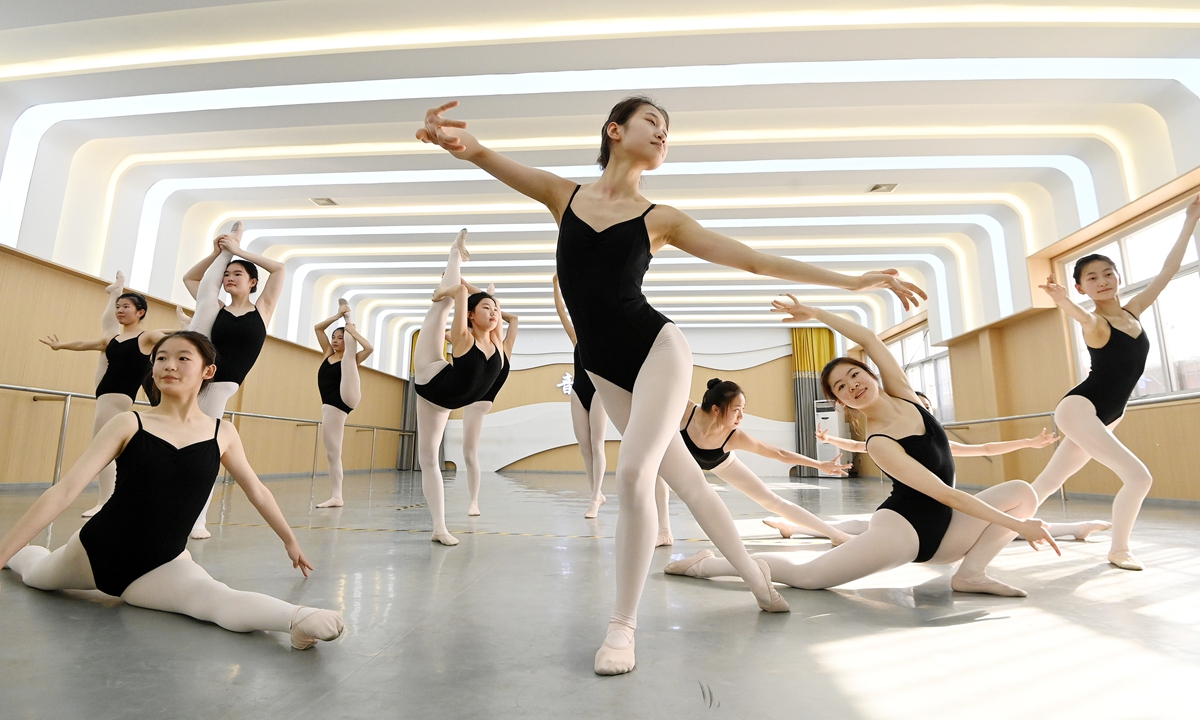
Students practice their skills at a dance training center in Handan, North China's Hebei Province. Photos: VCG
Even during summer break, changes to the admissions policy at the Communication University of China (CUC) have sparked heated discussions among students, with the reform becoming a hot topic on campus and on social media.
Amid heated debate over China's top media and arts school's admission reform, eight majors, including radio and television directing and theater directing, will no longer require separate arts exams and will instead admit students based solely on gaokao (the national college entrance exam) scores starting next year.
China's art college entrance examination, known as yikao, is a special admission pathway for students applying to arts-related majors. Applicants take both the gaokao and professional tests in areas such as fine arts, music, dance, acting, broadcasting and directing. Compared with many other university programs, art majors have traditionally placed less emphasis on gaokao scores and more on candidates' professional abilities and artistic potential.
"As one of China's most influential universities for media education, CUC's reform is seen as having broader implications," Xiong Bingqi, president of the 21st Century Education Research Institute and vice president of the China Association of College Newspapers, told the Global Times.
In his view, future arts admissions are likely to place greater emphasis on students' cultural literacy, professional interests and long-term potential.
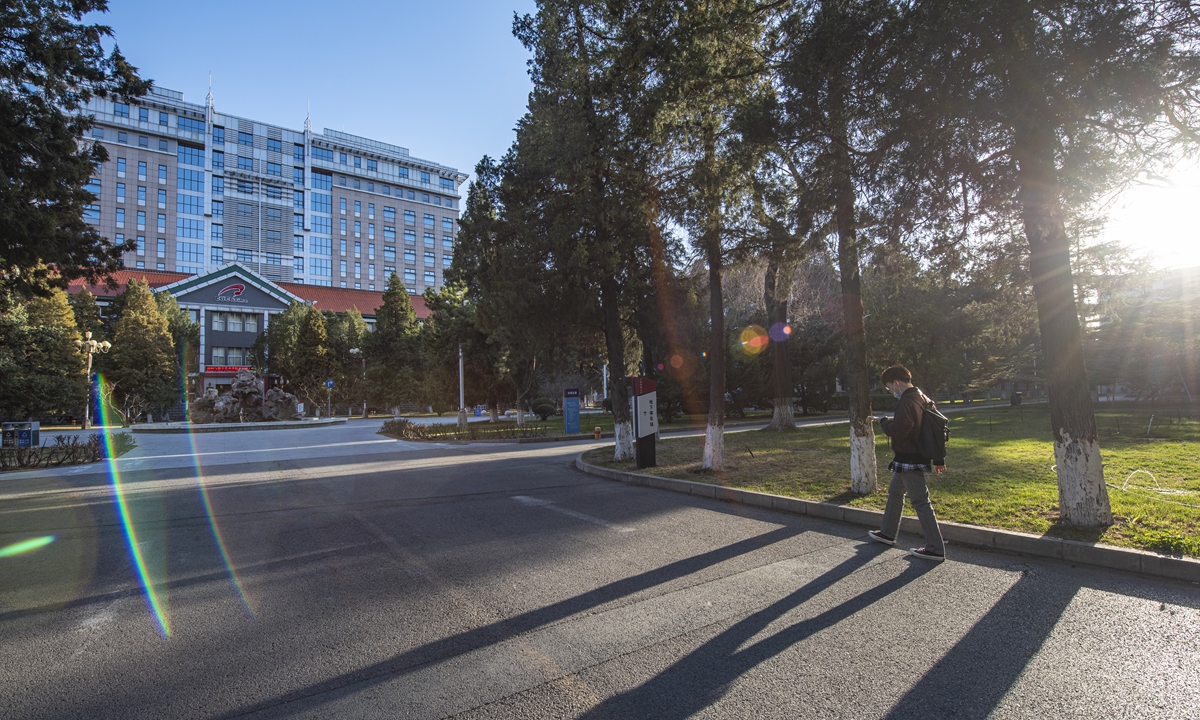
A view of the campus of Communication University of China in Beijing
Beyond the 'shortcut'
CUC's move reflects a broader trend among Chinese arts universities. In recent years, institutions such as Nanjing University of the Arts and Henan Academy of Fine Arts have reduced the number of majors requiring school-based exams on their specific art subjects, placing greater emphasis on academic performance and provincial-level arts examinations.
The changes reflect a broader trend in China's arts education admissions system, where universities have increasingly emphasized students' cultural foundation alongside their artistic abilities.
"CUC's latest adjustment reflects a broader trend in arts education reform, with some arts-related majors beginning to admit students based on their gaokao scores rather than separate professional examinations," Xiong told the Global Times.
According to Xiong, one of the key goals of the reform is to address the utilitarian mindset among some students and parents who view arts admissions as a "shortcut to college."
In the past, some arts programs had relatively lower requirements for cultural scores, prompting some students with weaker academic performance to turn to arts exams and enroll in professional training programs during high school. As a result, arts admissions were sometimes seen not as a choice driven by genuine artistic interest or career aspirations, but as an alternative pathway to enter universities.
"The cooling of arts exam fever, to me, is a good thing for arts education and talent cultivation," Xiong said. "By admitting eight majors directly based on cultural scores, CUC is effectively removing the stepping stone of the 'shortcut to college,' allowing more students with genuine artistic interests and professional ambitions to enter these fields."
For students, the reform has directly changed how they prepare for university and make academic choices.
"The changes have created more pathways for students interested in media-related fields," a junior arts management student surnamed Wang at CUC, told the Global Times.
Wang recalled that many students around her began preparing for arts exams as early as their sophomore year of high school and later traveled to cities where their target universities were located for intensive training.
As some media-related majors shift to cultural-score-based admissions, more students who did not take the arts exam but have a genuine interest in the media field may gain opportunities to enter these programs, she said.
Rethinking media talentBeyond changing how students enter arts majors, the reform has also sparked discussion over how universities should train future media professionals.
A CUC sophomore student surnamed Wei from the School of Theater, Film and Television told the Global Times that one challenge after scrapping arts exams for some majors is how to support students who enter without systematic professional training.
"Students who previously prepared for arts exams often developed basic skills in audiovisual language and practical experience before entering university. Those admitted based on gaokao scores may need stronger professional guidance and more opportunities for practice," Wei said.
In addition to individual student development, the reform has also prompted discussions over what qualities future media professionals should possess. Kai Zhu, a drama education instructor at a leading high school in Beijing, told the Global Times that an overemphasis on exam-oriented training in media arts education had previously led some programs to focus on templates and techniques while neglecting core competencies.
"If media arts become a low-score pathway to university, the professional nature of the field will become blurred, and the industry may face a shortage of well-rounded talent," Kai said. CUC's reform signals a shift toward selecting media talent with both cultural depth and professional skills.
"Creative fields such as screenwriting and filmmaking are not built on technical skills alone; they require an understanding of society, humanity and history," he said.
"Cultural accumulation determines the depth and vision of creative works."
The reform is therefore not merely about changing the way students enter arts programs. Ultimately, it is about what kind of creators media and arts programs hope to nurture: not only those equipped with professional skills, but those who can think deeply, understand society and transform their cultural knowledge into meaningful works, he noted.
Wang Wenpei contributed to this story.
。然而,在新加坡,这一传统观念正逐渐发生转变。根据新加坡人力部最新发布的
《常年职业工资调查》报告,2023年最赚钱的职业并非医生,而是
石油和海事燃油交易员。这一变化不仅反映了新加坡经济的多元化发展,也揭示了职场薪酬结构的动态调整。
薪资最高的职业竟然是...... 在2023年的新加坡职场,石油和海事燃油交易员居然月薪中位数最高。新加坡人力部在六月底公布的《常年职业工资调查》报告中显示,该职业的总月薪中位数竟然高达
1万4911新元,位居所有职业之首。这一数字,
不仅远超传统高薪职业如医生、律师等,也充分体现了新加坡作为全球贸易和金融中心对能源市场的高度依赖和敏锐洞察。石油交易员的崛起,是新加坡经济多元化发展的一个缩影,也是全球经济格局变化在微观层面的具体体现。
第二梯队有哪些职业? 紧随石油交易员之后的是科技领域。首席
信息官、技术官、安全官等职位以月均超过
1万3000新元的收入,稳居高薪职业的第二梯队。新加坡
编辑职业的月薪也较高,平均收入达到
1万新元大关,稳居薪资排行榜的
第18位,紧随
医生之后,后者则占据
第15名的位置。这一数据不仅彰显了编辑工作在新加坡社会中的重要性与价值,也反映了该领域专业人才所享受的薪酬优势。

二 | 新兴职业 网络安全 值得注意的是,技术、金融与媒体行业继续展现出强劲的薪酬竞争力,多个相关职位跻身薪资榜单前20强。这一现象深刻反映了新加坡作为国际金融中心与科技创新枢纽的地位,以及对多元化专业技能的高度需求。随着网络环境的日益复杂与网络安全威胁的加剧,网络安全专业人才成为了市场上的稀缺资源。其重要性被社会各界广泛认可,直接导致了对这类人才的需求激增。预计在未来一段时间内,熟练掌握网络安全技术的专业人士将继续享受薪酬增长的红利,成为职场中的热门人才。这一现象不仅体现了市场对专业能力的认可,也预示着网络安全领域将持续成为新加坡乃至全球职业发展的一个重要方向。医生高薪地位的相对变化 值得注意的是,尽管医生在新加坡职场中依然受到高度尊重,但其薪酬水平却未能跻身前十。这一变化并非意味着医生职业价值的降低,而是反映了新加坡职场薪酬结构的多元化和动态调整。随着新兴行业的崛起和传统行业的变革,职场薪酬格局也在不断变化之中。热门行业的多元化发展 除了上述高薪职业外,新加坡的热门行业也呈现出多元化的特点。从农业科技到绿色基础设施,从银行与金融服务到旅游及款待业,每一个行业都在为新加坡的经济增长贡献着力量。这些行业的繁荣不仅为求职者提供了广阔的就业空间,也推动了新加坡经济的多元化发展。新国立有石油相关专业吗? 有! 化学与生物分子工程 Chemical and Biomolecular Engineering 化学工程(Chemical Engineering, ChE)是一门应用科学,专注于设计、开发和优化化学过程,以实现化学品、石油产品、食品、药品及消费品的高效、安全、环保生产。它涉及反应工程、热传递、分离技术及生物现象等多个领域。课程特色: 目标:培养能够解决复杂工程问题的未来工程师。内容:涵盖材料组成、能量转换、物质性质、物理作用、生物材料特性及数学关系等。区别:与化学和应用化学不同,化学工程更侧重于工业应用,特别是化学反应、分离技术及经济、安全、环保的过程设计。

三 | 职业前景: 化学工程师在化学、制药、石油炼制、石油化工、半导体/电子、生物技术等行业中具有重要地位。主要雇主包括埃克森美孚、壳牌、葛兰素史克等国际知名企业。此外,化学工程背景也为毕业生提供了探索非工程领域职业选择的机会。课程结构: 学制:四年学分要求:160个学分(约40门课程)共同课程:60个学分(15门课程),由CDE与6个行业合作伙伴共同开发,旨在培养21世纪所需的基本能力。

四 | 课程亮点: 强调实践与创新,结合理论知识与工业应用。提供跨学科学习机会,拓宽学生视野。与行业巨头合作,为学生提供实习与就业资源。奖学金与财务资助 英菲尼姆新加坡-新加坡国立大学化学与生物分子工程奖学金背景:英菲尼姆作为润滑油和燃料添加剂领域的领导者,与NUS合作设立此奖学金,以纪念新加坡建国50周年。资助金额:首届奖学金预付45,000新币。

五 | 申请条件:化学工程学士学位课程第3或第4阶段学生。

六 | 新加坡公民或永久居民。累积平均绩点(CAP)至少4.0(第2、3阶段结束时)。未同时接受其他形式的资助(除非获得批准)。评选流程:由ChBE系组建评选委员会进行面试和选拔,具有唯一裁量权。特别鼓励:第3阶段获奖者有机会在英菲尼姆新加坡实习。

七 |
Current article:http://uq8.ningshunsaotuiqiao.shop/news/20260826_664167.html
Published on:00:00:00


